Howard Fitzcharles' 1970 MGB GT with Oldsmobile 215 V8
 BritishV8: the site for enthusiasts of modified British sports cars
Read the full write-up at BritishV8: the site for enthusiasts of modified British sports cars ↗
 Photo: BritishV8: the site for enthusiasts of modified British sports cars
Howard Fitzcharles' 1970 MGB GT rebuilt with a custom Oldsmobile 215 V8
Howard Fitzcharles turned his son's worn-out MGB GT into a decade-long home-built V8 conversion using an Oldsmobile 215 engine he acquired by trading Ferrari 308 Weber carburetors. The build includes self-designed sand-cast intake manifolds, a pneumatic starting system in place of a conventional starter, a reworked cooling system, and a Triumph TR-7 gearbox swap, finished with a show-quality paint job done by a friend's bodyshop. He named the finished car the Green Dragon and was still sorting fuel delivery and carburetor jetting issues after its first show appearance.
Specs
As stated in the original write-up.
- Engine
- Oldsmobile 215 cid V8, with custom sand-cast intake manifolds
- Carburetion
- Four Weber DCNF 40mm carburetors (ex-Ferrari 308) fitted with motorcycle velocity trumpets
- Ignition
- Electromotive XDI direct ignition system, distributor eliminated, trigger wheel on machined Honda Civic front pulley
- Starting system
- Custom direct-acting pneumatic starting system with onboard air tank made from a Freon bottle and electric recharging compressor, starter motor and ring gear removed
- Gearbox
- Triumph TR-7 5-speed gearbox with TR-8 clutch disk and Mazda RX-7 Turbo pressure plate
- Flywheel
- Lightened Oldsmobile flywheel, balanced with pressure plate
- Cooling
- Remote BMW water pump, coolant routed to fourteen block and head ports, Jaguar thermostat housing, enlarged water pump pulley
- Rear axle
- Hybrid Ford 8.8 / MGB (Salisbury) axle, upgraded with disc brakes
- Steering
- MGB steering rack shortened with two Moroso steering U-joints, column offset to the left
- Wheels
- Vintage English-made magnesium wheels
- Exhaust
- Eight individual pipes into eight reverse-cone megaphone mufflers, four tips per side
- Instruments
- Triumph TR-7 instrument cluster
- Paint
- Pearl metallic green, custom flame graphics, done by a friend's bodyshop
- Body
- Modified hood with raised center reverse scoop, custom aluminum and stainless mesh grille, fender flares, cut-back firewall
Parts used
Parts named as used in the original write-up, grouped the way the Parts page groups them. Where one of the shops we index lists the same thing for this car, it is shown underneath with a link to the shop.
Engine 2
- Oldsmobile 215 cid V8
Base engine for the conversion, acquired from a friend's street rod project
- Custom sand-cast intake manifolds
Designed and cast by the owner to suit the lowered engine position and Weber carburetors
In the shops Intake Manifold ↗
 Moss Motors – Triumph TR6/TR250· $305.25 USD
 Intake Manifold Adaptor ↗Moss Motors – Triumph TR6/TR250· $0.00 USD
 Intake Manifold to Head Gasket ↗Moss Motors – Triumph TR6/TR250· $6.40 USD
Fuel & Ignition 3
- Weber DCNF 40mm carburetors
Set of four, originally from a Ferrari 308, fitted with motorcycle velocity trumpets and re-jetted for the engine
In the shops Weber 40 DCOE Carburetor ↗Moss Motors – Triumph TR6/TR250· $810.25 USD
 Weber Carburetor Soft Mount Kit ↗Moss Motors – Triumph TR6/TR250· $34.75 USD
 Weber DGV Carburetor Rebuild Kit ↗Moss Motors – Triumph TR6/TR250· $73.75 USD
 - Electromotive XDI ignition systemElectromotive
Direct ignition system replacing the distributor, triggered off a modified front pulley
- Reverse-cone megaphone mufflers
Eight individual exhaust pipes into eight megaphones for the desired exhaust tone
Cooling 2
- BMW water pumpBMW
Mounted remotely in place of the stock Oldsmobile water pump
- Jaguar thermostat housingJaguar
Fitted to better control engine temperature after reworking the coolant circuit
In the shopsXJ8 II Thermostat Cover ↗Moss Motors – Triumph TR6/TR250· $163.26 USD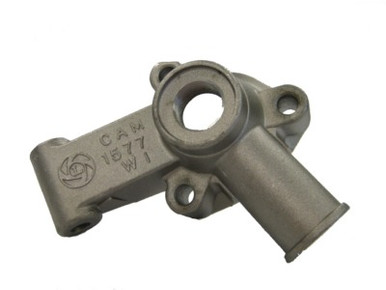 Thermostat Housing (MGB 1977-80) ↗
 bpnorthwest.com· $29.95 USD
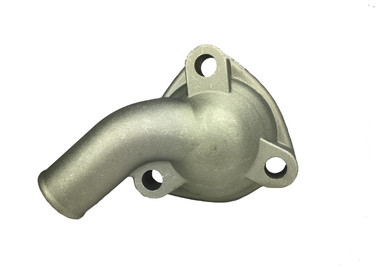 Thermostat Housing (MGB 1968-76) ↗bpnorthwest.com· $16.95 USD
Gearbox & Drivetrain 4
- Triumph TR-7 5-speed gearbox
Replaced the original MGB transmission
In the shops Mount, gearbox, Ford 5 speed ↗Moss Europe (UK)· £23.75 GBP
 Five Speed Gearbox Unit, ford T9 ↗Moss Europe (UK)· £3,185.75 GBP
 Five Speed Mazda Gearbox Conversion ↗Moss Europe (UK)· £5,131.00 GBP
 - TR-8 clutch disk
Paired with the TR-7 gearbox swap
In the shops Clutch Disk for Toyota 2000GT ↗
 JDM Car Parts· $249.99 USD
 - Mazda RX-7 Turbo pressure plate
Used with the TR-8 clutch disk, balanced with the lightened flywheel
- Hybrid Ford 8.8 / MGB Salisbury rear axle
Upgraded with disc brakes for the V8 conversion
In the shops MGB Salisbury Axle Rear Wheel Bearing Kit ↗
Betaset (France)· €27.00 EUR
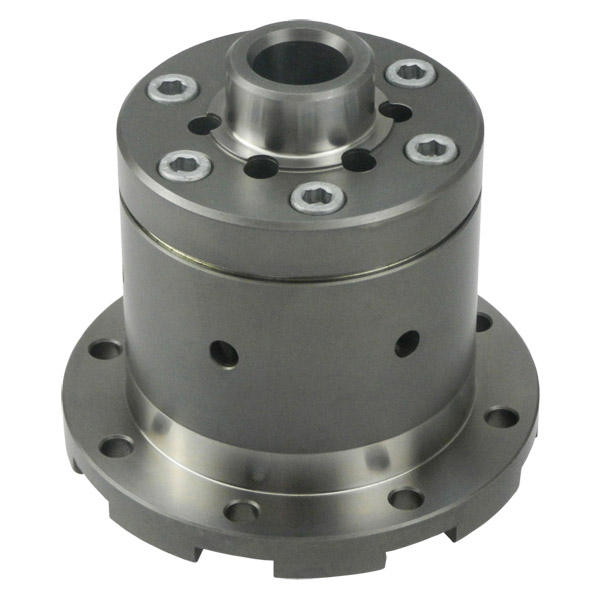 Blackline MGB Salisbury Axle Helical LSD ↗
Rally Design· £499.00 GBP
 MGB Salisbury Axle Differential Cover Gasket ↗
Suspension & Steering 1
- Moroso steering U-jointsMoroso
Two fitted to a shortened MGB steering rack shaft to clear the relocated pedals and column
In the shops Moroso Power Steering Tank (NC) ↗
 MiataSpeed· $245.00 USDJoint ass steering MGB ↗
Motaclan Limited· £14.57 GBP
 Steering Column U-Joint ↗Moss Motors – Triumph TR6/TR250· $36.99 USD
Interior 1
- Triumph TR-7 instrument cluster
Fitted behind a custom dashboard
In the shops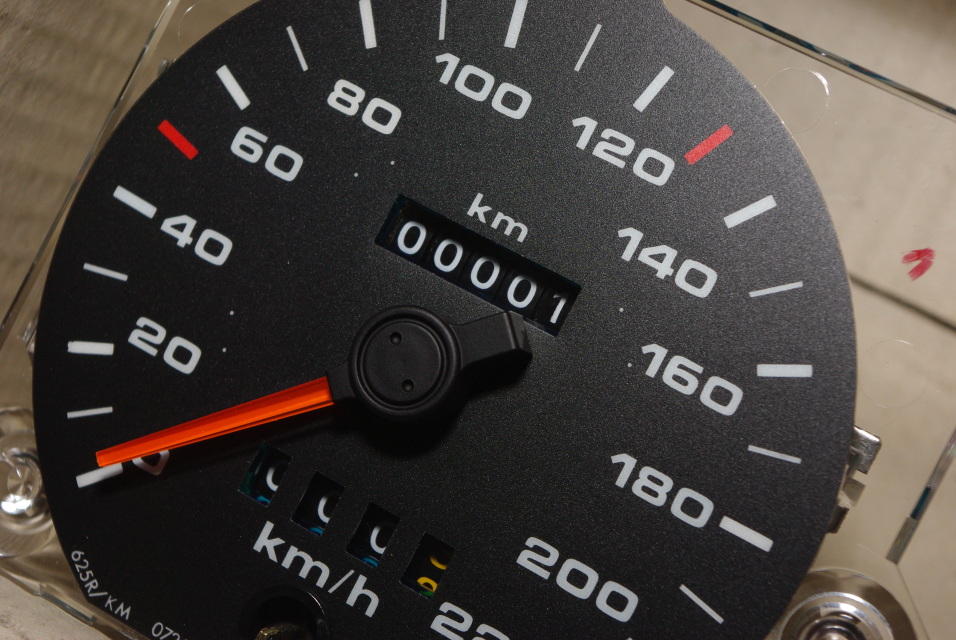 Ford Sierra GL Speedometer Instrument Cluster ↗Classic Parts Shack· £189.99 GBP
 Instrument Cluster Printed Circuit Board - Mini 1989-1996 ↗
 Mini Sport· £98.20 GBP
Electrical 1
- Nippondenso alternatorNippondenso
Charging system component fitted to the engine bay
Other 2
- Pneumatic starting system with Freon bottle air tank
Custom-built direct-air-injection starting system replacing the conventional starter motor and ring gear
- Electric air compressor
Recharges the onboard pneumatic starting air tank
Photos
18 pictures collected from the write-up, in the order they were posted, shown from BritishV8: the site for enthusiasts of modified British sports cars. A picture opens larger here, with the way through to the page it is on.
How it was done
Starting condition
The MGB GT had been used hard by the owner's son as an autocross and daily car before being traded to Fitzcharles for a motorcycle. After five more years of commuting duty it was worn out, with rusted floorboards and rockers, unpainted hood and fenders, a cut-up dashboard, mismatched seats and no carpet. Its only strong points were a good set of mag wheels and wide tires.
Getting the engine
A friend offered Fitzcharles a hopped-up Oldsmobile 215 V8 he had pulled from an Isuzu street rod, which Fitzcharles initially turned down. After separately being offered a set of Ferrari 308 Weber carburetors by a dealer clearing out a loft, he traded for the carbs and went back to buy the Olds engine, starting the V8 conversion.
Chassis and body work
Fitzcharles built a rotisserie and corrected body damage, replacing floorpans and other rusted sections. He collected four more 215 V8 engines along the way, using one unrebuildable unit for trial installations while fabricating motor mounts. He cut the firewall back and lowered and moved the engine rearward to give clearance for the Weber carburetors and avoid overlapping the steering rack.
Mechanical work
He designed and sand-cast his own intake manifolds, fitted eight reverse-cone megaphone mufflers, and swapped in a Triumph TR-7 five-speed gearbox with a TR-8 clutch disc and Mazda RX-7 Turbo pressure plate, lightening and balancing the flywheel. He machined a Honda Civic pulley for an Electromotive XDI trigger wheel, eliminated the distributor, and shortened the oil pan and pickup for ground clearance, modifying the oil pump for a remote filter.
Pneumatic starting system
Fitzcharles removed the starter motor and ring gear and built a custom air distributor that injects compressed air into each cylinder through holes drilled near the top piston ring, sealing some with pressed-in steel tubes where they broke into the coolant jacket. He fabricated an engage/disengage mechanism and a one-way valve, the latter taking five attempts, and the system draws from an onboard tank made from a Freon bottle recharged by an electric compressor.
Cooling and plumbing
In place of the stock water pump he mounted a BMW water pump remotely, routing coolant to fourteen ports across the block and heads and using all four head outlet ports instead of the stock two. He fitted a Jaguar thermostat housing and an oversized water pump pulley to manage what he expected would be an overly cool-running engine.
Paint and trim
A friend with a bodyshop offered to paint the car in exchange for help on a hot rod, rejected the owner's chosen color and talked him into a pearl green instead, and matched flame graphics that Fitzcharles had drawn and projected onto the body. The resulting show-quality finish led Fitzcharles to re-chrome and polish trim and buy powder coating equipment to match.
Progress so far
The car was shown unfinished at a local British car show, placing third in the regular MGB class, though starting it set off nearby car alarms. Afterward Fitzcharles worked through running problems including fuel starvation from dense safety foam in the tank and a fuel pump unable to meet Weber pressure needs, along with extensive carburetor jet and float-needle adjustments to get the engine to idle and run off choke reliably.
A summary in our own words. The full account, with all its detail, is in the original write-up: read it at BritishV8: the site for enthusiasts of modified British sports cars ↗
Worth knowing
- Dense fuel tank safety foam can restrict fuel flow enough to cause starvation
- A standard fuel pump may not supply enough pressure for Weber carburetors
- Float needle seat size must match the chosen main jets or lean running problems occur